
PERU travelling the high-Andes and the hidden canyons to ancient landscapes.
These hotels are not merely places to rest. They are invitations to slow down, to breathe the high altitude air and to understand what it means to be small in a very large, very ancient landscape.
Whether you are planning your first journey to Peru or your tenth, I hope my trip inspires
you to travel far beyond the ordinary.
Four Stays that are worth the Journey
Cirqa Puqio Tinajani Titilaka
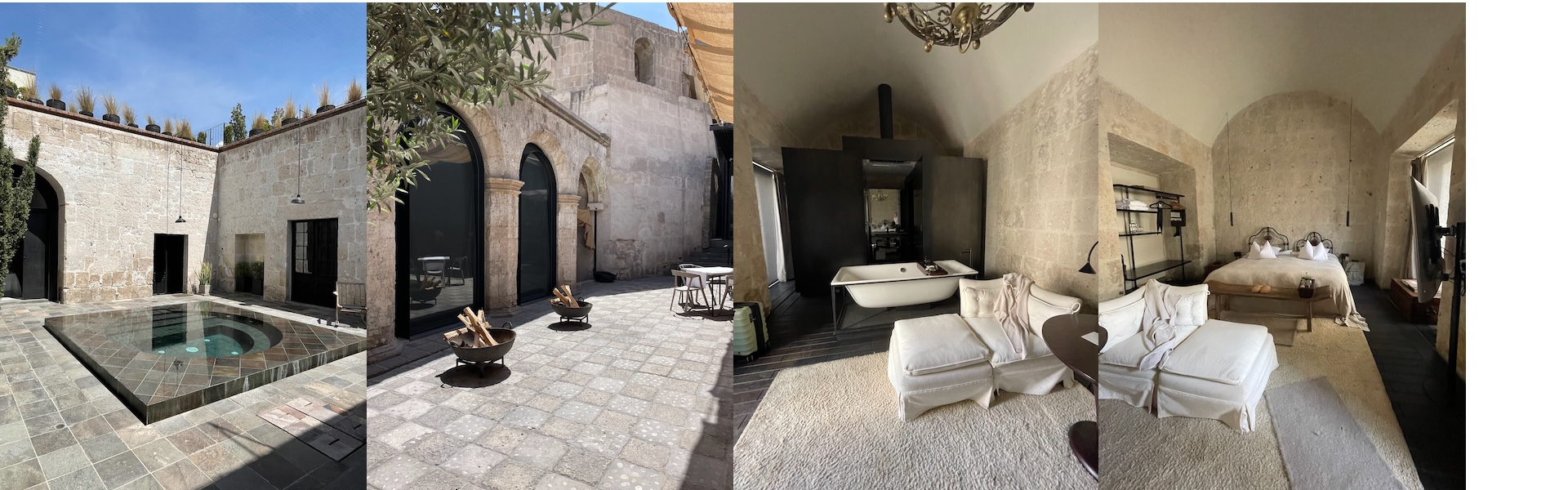
Cirqa in Arequipa
From the moment I arrived, the Andes didn’t just loom in the background—they defined everything. The air felt thinner, yes, but also clearer, as if each breath came with a sharper sense of presence.
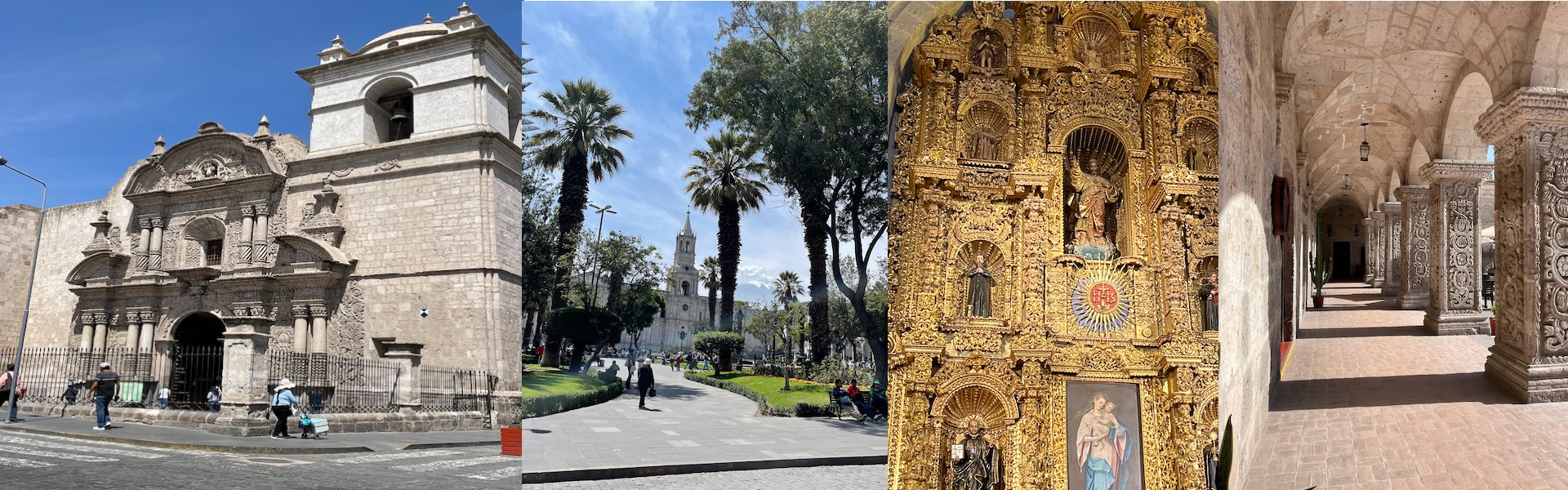
My journey began in Arequipa, the “White City,” where volcanic stone buildings glow softly in the sun. Tucked within its historic heart, Cirqa felt less like a hotel and more like a sanctuary. Built from centuries-old sillar stone, its quiet courtyards and candlelit spaces created an atmosphere that encouraged slowing down. Days here were unhurried—wandering cobblestone streets, watching the light shift over nearby volcanoes and settling into a rhythm that felt both ancient and grounding.
Minimalist decor honours the building’s monastic origins, and the result is a hotel that transports guests to another era without sacrificing a single modern luxury. The UNESCO World Heritage setting makes every evening walk through the city an event in itself.
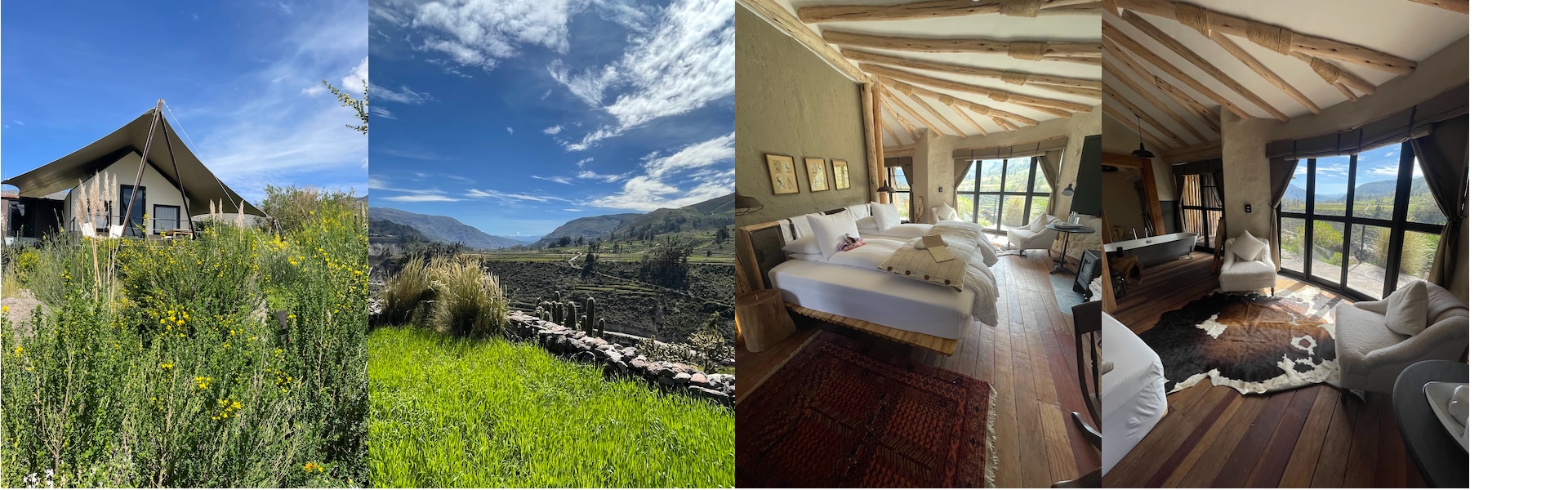
Puqio in Colca Canyon
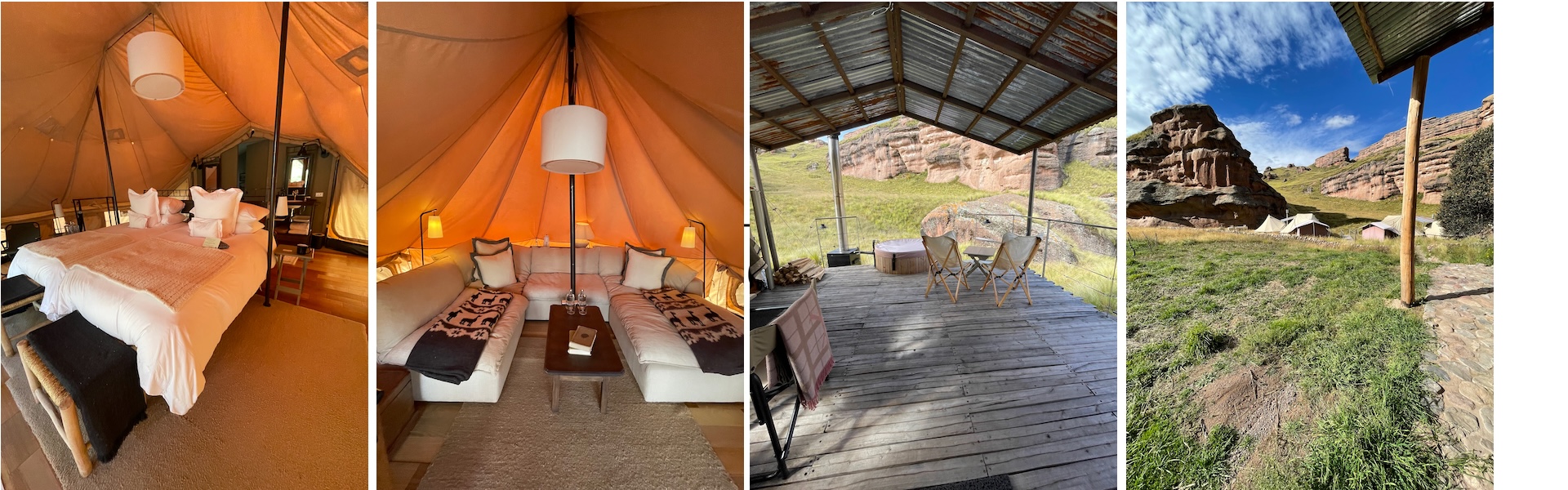
Deep in the Colca Valley — beyond the famous canyon, where soaring condors and pre-Inca terraces still in use frame a landscape of fuming volcanoes and grasslands — PUQIO was Peru’s first luxury tented camp when it opened in 2023. Inspired by a 1934 National Geographic article titled “A Forgotten Valley of Peru,” it’s eight canvas accommodations (Carpa Refugio, Carpa, and Pirca) offer rustic elegance: fireplaces, lion-claw bathtubs, balconies and mountain views. All rates are fully inclusive — meals, guided excursions, afternoon tea and transfers — with food prepared in clay ovens and over open flames, celebrating raw Andean flavours. Local guides lead guests through untrodden pathways, horseback rides at sunset and visits to the therapeutic springs of Uyo Uyo as condors fly above.
What struck me most was the simplicity. Life at Puqio isn’t about schedules or distractions. It’s about early mornings wrapped in crisp mountain air, long walks across open terrain, and evenings spent under a sky so clear it hardly seems real. Without the usual noise of everyday life, even the smallest moments—like the sound of the wind or the warmth of the sun—felt more vivid.
There was also a deep sense of connection—to the land, certainly, but also to the culture. Spending time with local communities, learning about traditions that have endured for generations, gave the experience a richness that goes far beyond scenery.
Puqio doesn’t try to dazzle you. It doesn’t need to. Instead, it offers something rarer: space to breathe, to reflect, and to feel fully present. And long after leaving, that feeling lingers.
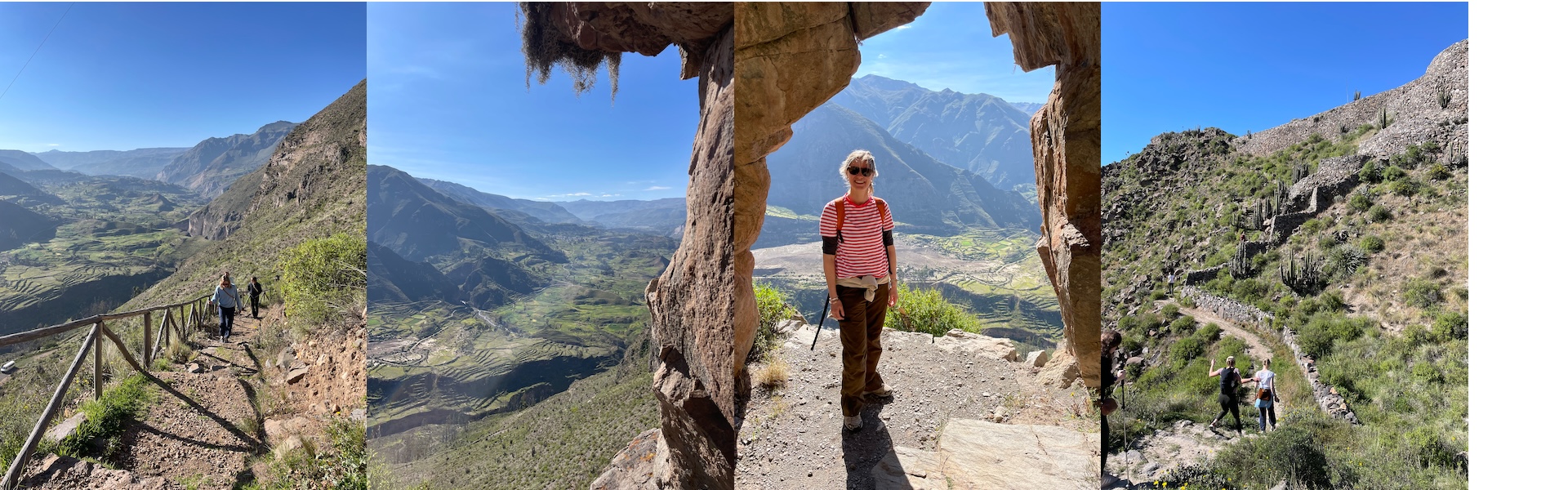
Tinajani Canyon
Set within a private 150-hectare nature reserve on the high Altiplano — between Cusco, Lake Titicaca and the Colca Valley — Tinajani is a lovingly restored old farmhouse which anchors six safari-style tented suites (campamentos), each comprising two connected canvas spaces: one for sleeping with an ensuite bathroom, one for relaxing, plus a private outdoor deck with a hot tub and views of the ancient Tinajani Canyon. The towering reddish-hued sandstone formations — legend has it they are giants turned to stone by the gods — rise all around.
Meals follow open-flame traditions: Chairo soup, slow-cooked stews, evening cheese fondues and breakfasts of crêpes made from ancient grains. With only 12 guests at any one time, it is one of the most intimate and remote stays in all of Peru.
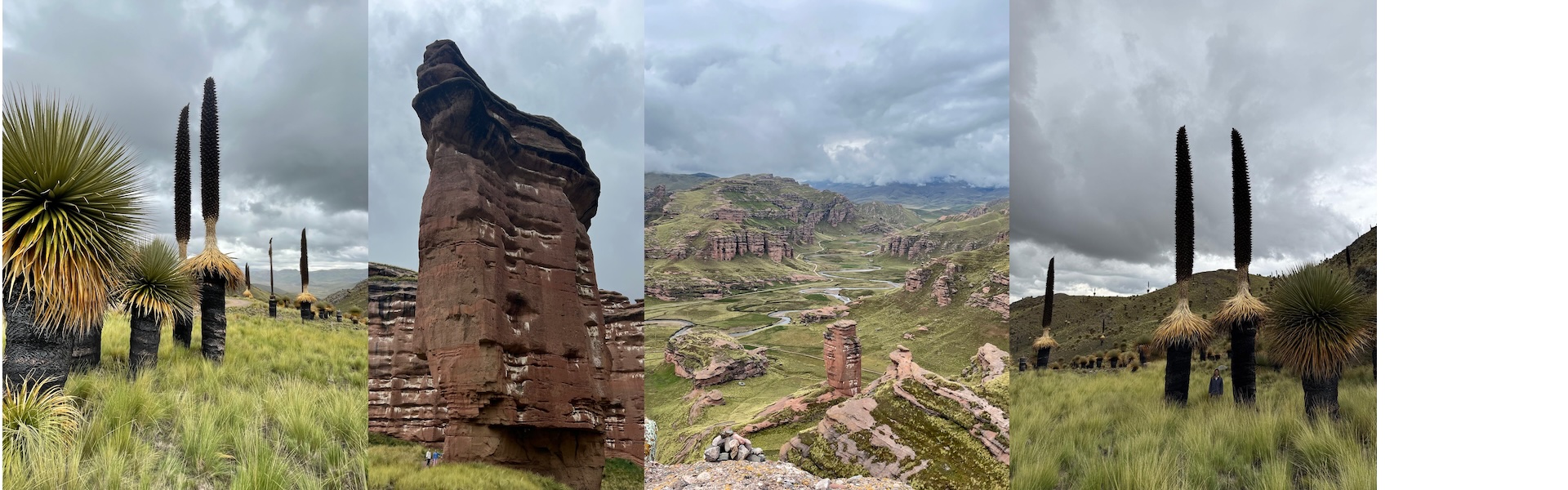
During the day, I hiked the ravines, explored the caves, meandered through the Ancient Puya Raimondi Forest and then rested my head in the evening after soaking in my hot tub and gazed into the huge skies that envelop the giant rock formations which surround me. At this altitude, your senses are heightened filling your veins with an adrenaline that is like I’ve never felt before.
Titilaka on Lake Titicaca
Check-in at Titilaka begins with a small ceremony: a smiling staff member checked my oxygen levels before I’d even set down my bag and pressed a warm cup of muña — Andean mint tea — into my hands. Like Tinajani, Puqio and Cirqa, this is altitude country, and the lodge treats that fact with both seriousness and grace.
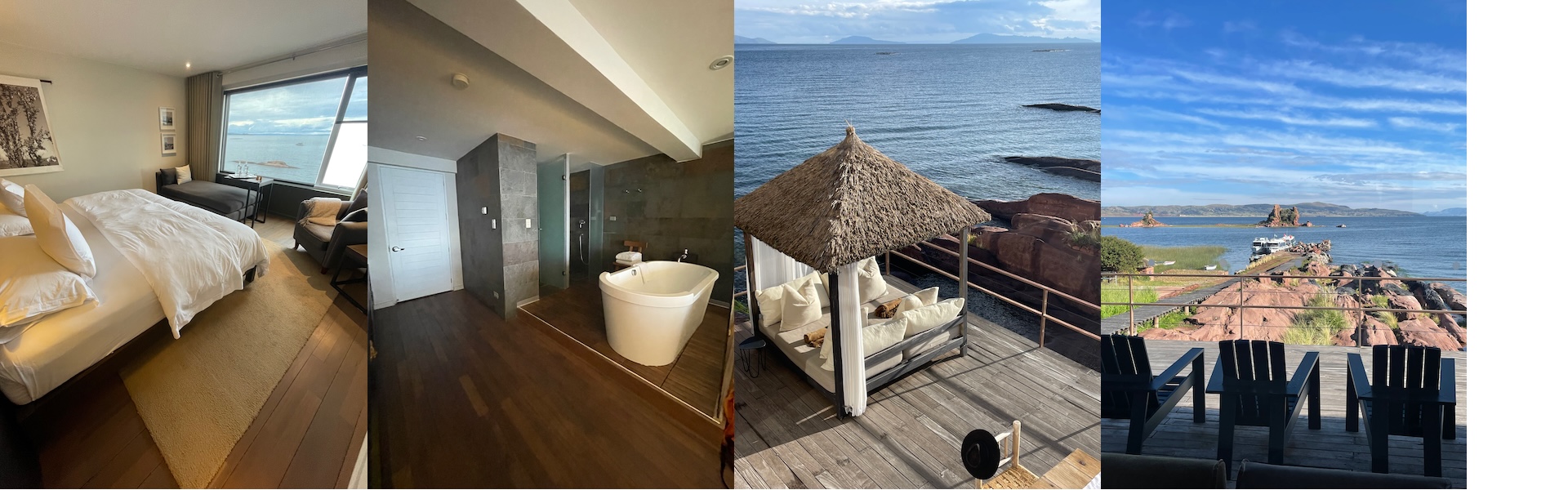
My room faced the sunrise, overlooking the vast lake and distant silhouette of Taquile Island. Heated floors warmed bare feet in the cold Andean mornings; the freestanding bathtub was run in the evening (as a treat to myself) with rose and muña salts to ease the lightheaded feelings from the altitude. Local textiles, organic bath products made with muña by the owner’s sister — every detail whispered of place rather than generic luxury.
At dinner that evening, after enjoying my pisco sour by the log-burning fire, the menu on my table was an ode to the Andes: fresh lake trout, alpaca steak from the highlands, quinoa harvested nearby and potatoes in varieties I couldn’t name. Washed down with a delicious local red wine.
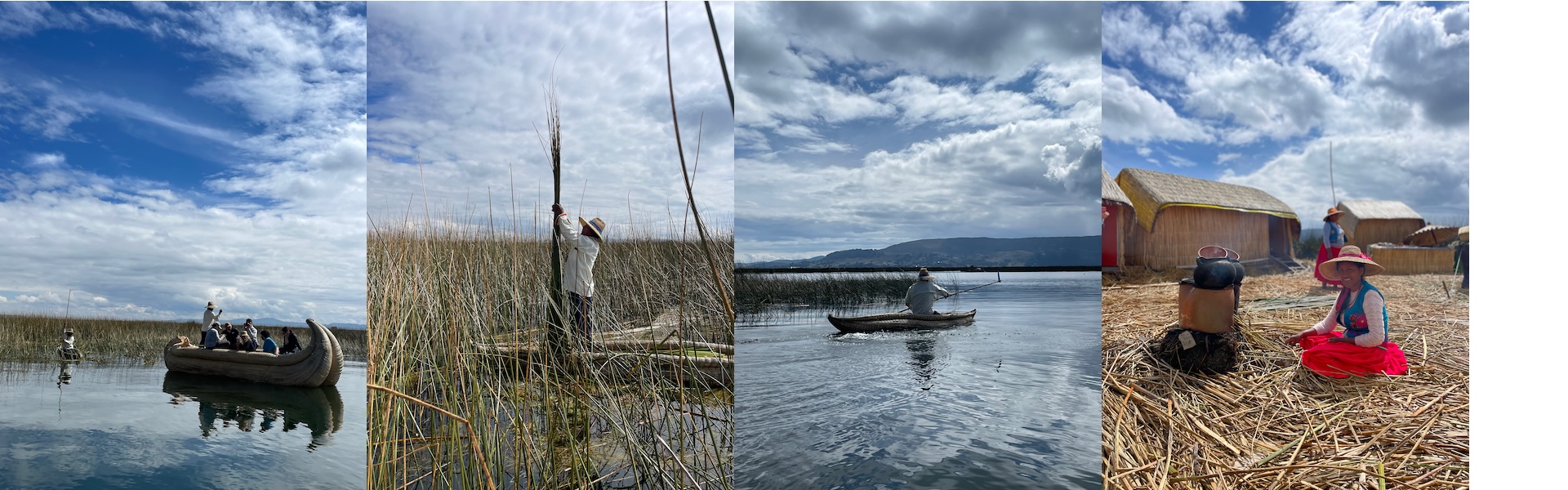
During the day, I embarked on an exploration to the floating Uros Islands followed by Taquile Island for lunch. What makes Titilaka’s Uros excursion genuinely special is its exclusivity: the lodge works with a single island family, meaning no other outside visitors are permitted during your time there. The boat anchored offshore, and we transferred to a traditional reed boat for the final approach — an act that felt deliberate, ceremonial, a shedding of the modern world.
The island itself is woven from totora reeds — the same reeds used to build the boats, the homes, and the raised walkways that sponge softly underfoot. The Uro-Aymara people who live here call themselves kot-suña, “people of the lake.” Their ancestors fled persecution on the mainland centuries ago, and built their refuge entirely from the lake itself. Standing on a floating island, feeling the gentle give of the reed beneath your feet, you understand that this is not a museum exhibit — it is a living world, tended daily.
Where the Uros Islands float, Taquile is ancient and solid, its agricultural terraces climbing in green tiers toward a central plaza that has changed little in centuries. The residents still speak Quechua, the language of the Inca. Lunch was served as a picnic, arranged by the Titilaka team against the backdrop of the lake and the snow-capped peaks of Bolivia’s Cordillera Real on the horizon. It was one of those meals where the setting overwhelms everything else on the table. The sky was absurdly blue. The mountains gleamed. A cold beer arrived from somewhere and seemed, in the moment, like a minor miracle.
Titilaka is not simply a luxury hotel. It is a carefully tended threshold between two worlds — the comfortable and the ancient, the personal and the communal. The lodge operates in genuine collaboration with the local Aymara community, channelling revenue to people who have lived beside this lake for millennia. You travel here as a guest of the landscape itself.
